Electrical Repair in Port St. Lucie, FL
A breaker that keeps tripping, an outlet that went dead, lights that flicker for no reason — these are symptoms, not diagnoses. We troubleshoot residential electrical problems to the actual source, then repair them properly so they stay fixed.
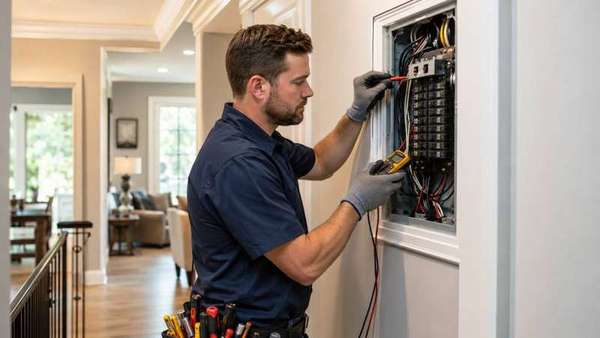
Common Electrical Problems We Repair
Most residential repair calls fall into a handful of patterns. Here is what they usually mean — and what fixing them actually involves.
Breakers that keep tripping
A tripping breaker is doing its job — protecting the wire from overload or a fault. The cause could be too much load on one circuit, a failing breaker, or a short or ground fault somewhere in the run.
We measure the actual load, test the breaker, and trace the circuit to find whether it is an overload, a worn breaker, or a wiring fault.
Dead outlets or dead rooms
One dead outlet is often a failed device or a tripped GFCI upstream. A whole dead room usually points to a tripped breaker, a failed connection, or a damaged wire.
We work backward from the dead point — testing devices, connections, and the breaker — until the break in the circuit is found.
Flickering or dimming lights
Occasional dimming when a large appliance starts can be normal. Persistent flickering, especially in one area, often means a loose neutral or a failing connection — both worth investigating promptly.
We check connections at the fixture, switch, and panel, and verify the neutral and ground paths are solid.
Warm, buzzing, or sparking devices
Outlets and switches should never be warm to the touch or make noise. Heat and arcing mean a loose or damaged connection that is generating resistance — a genuine fire risk.
We de-energize the circuit, inspect the device and box, and replace damaged components with proper terminations.
Partial power loss
Half the house out while the rest works fine often indicates a lost leg of service, a failed main breaker, or a utility-side issue.
We test at the meter and main to determine whether the fault is on your side or the utility's, so you are not paying to fix their problem.
Storm-related electrical damage
Treasure Coast thunderstorms and hurricane-season surges damage breakers, fry electronics, and degrade outdoor wiring and connections.
We assess surge and water damage, test affected circuits, and recommend surge protection to reduce repeat damage.
How a Repair Visit Works
Guessing is expensive. Our process is built to find the real fault before any repair begins.
Listen first
We start with your description: when it happens, what is running, whether it is getting worse. Patterns in the symptoms narrow the search fast.
Test, don't guess
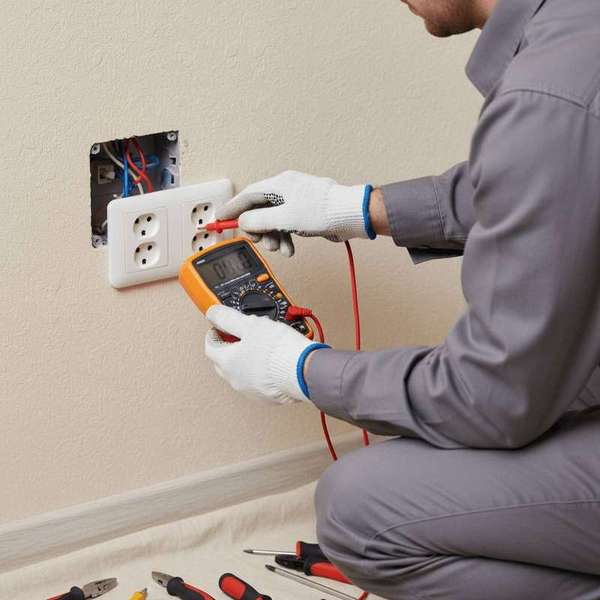
Using meters and testers, we verify voltage, continuity, and load at the panel, the device, and points in between — following the evidence, not assumptions.
Explain before repairing
You get a plain-language explanation of what failed, why it failed, and what the repair involves — with the cost agreed before work starts.
Repair and verify
We make the repair to code, then re-test the full circuit under load to confirm the problem is actually gone — not just quiet for now.
Repair or replace?
Sometimes the right repair is a single connection or device. Sometimes the pattern — repeated breaker failures, scorched wiring, an obsolete panel — means the component has reached the end of its reliable life and replacement is the honest recommendation. We will tell you which one you are looking at and why, and the decision is always yours.
All repair work is performed under Florida Electrical License #ER13016161, to the Florida Building Code and National Electrical Code.
When to Call Right Away
Some electrical symptoms can wait for a scheduled visit. These should not.
Call immediately — 24/7 — if you notice:
- A burning or fishy smell near outlets, switches, or the panel
- Sparking, arcing, or visible scorch marks
- An outlet or switch that is hot to the touch
- Smoke or melted plastic anywhere in the electrical system
- A breaker that trips instantly and will not reset
- Shocks or tingles from appliances, fixtures, or plumbing
Call (561) 552-3753 — if it is unsafe to wait, we treat it as an emergency.
A Treasure Coast note on older homes
Many Port St. Lucie and Fort Pierce homes were built decades ago, and Florida's heat, humidity, and salt air corrode connections and age components faster than in drier climates. If your home still has its original panel or wiring and you are seeing repeated electrical quirks, a professional evaluation is worth it — small faults in older systems tend to grow, not shrink.
Electrical Repair FAQs
Why does my breaker keep tripping?+
Usually one of three things: the circuit is overloaded, the breaker itself is worn out, or there is a short or ground fault in the wiring. Repeatedly resetting a tripping breaker without finding the cause is unsafe — the breaker is warning you about something. We test the load and the circuit to identify which one it is.
What causes lights to flicker?+
Brief dimming when a large motor starts (like an AC compressor) is often normal. Ongoing flickering usually points to a loose connection — at the fixture, the switch, or in the panel — or a loose neutral. Because loose connections generate heat, persistent flickering deserves a prompt look.
Is a warm outlet dangerous?+
Yes — outlets should never feel warm. Heat means resistance at a loose or damaged connection, and resistance creates more heat over time. Stop using the outlet, switch off its breaker if you can identify it, and call us.
Can you find a fault that's hard to reproduce?+
Intermittent faults are the hardest kind, but systematic testing — checking every connection point on the circuit, measuring under load, and inspecting for heat damage — finds most of them. If you can note when it happens and what is running, that information genuinely helps.
Do you charge to diagnose the problem?+
Diagnostic visits are quoted up front before we begin, so you know the cost of finding the problem. The repair itself is quoted separately once we know what is wrong — you approve it before any repair work starts.
How long does a typical repair take?+
Many common repairs — a failed outlet, a worn breaker, a bad switch — are completed in a single visit once diagnosed. More involved faults, like damaged wiring inside walls, take longer and we will give you a realistic timeframe before starting.
My power is partially out. Is that my problem or the utility's?+
It could be either. We test at the meter and main breaker to determine where the failure is. If it is on the utility side, we will tell you so you can report it rather than paying for an unnecessary repair.
Which areas do you serve?+
Port St. Lucie, Fort Pierce, Stuart, Jensen Beach, and Palm City. We are a service-area business — we come to you.
Service Areas
Residential electrical repair across the Treasure Coast:
- Port St. Lucie
- Fort Pierce
- Stuart
- Jensen Beach
- Palm City
Request an Estimate
Describe the problem and we will schedule a diagnostic visit. For anything sparking, smoking, or smelling burnt, call (561) 552-3753 now.
Company Information
- Service providerFlorida Electrical and Fire Alarm LLC
- Phone(561) 552-3753
- Emailservices.floridaelectrical@gmail.com
- LicenseFlorida Electrical License #ER13016161
- HoursMonday–Saturday 8 a.m.–5 p.m.; 24/7 emergency service
- Service areasPort St. Lucie, Fort Pierce, Stuart, Jensen Beach, Palm City (service-area business — no storefront)